Photo via Pexels
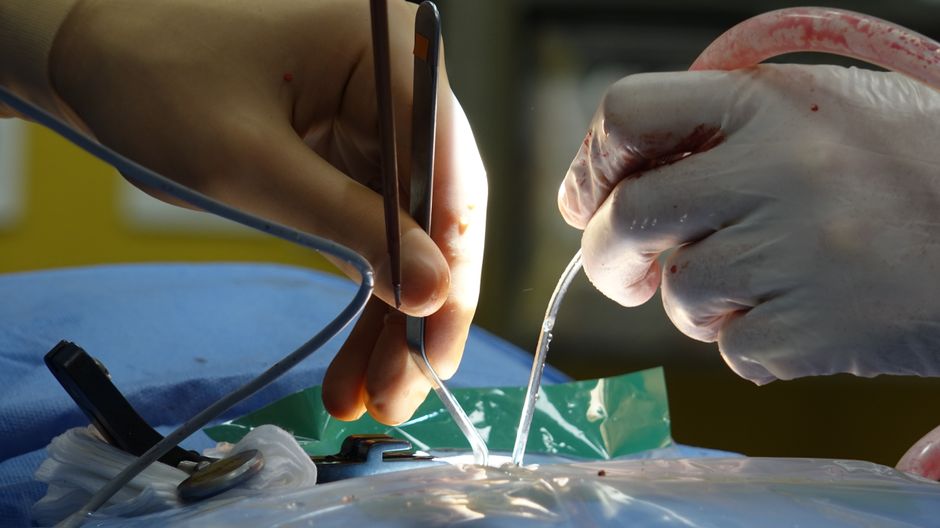
Regenerative Peripheral Nerve Interfaces (RPNIs) are a surgical technique that enhances prosthetic control and sensory feedback by allowing amputated nerve endings to grow into small, denervated muscle grafts. These nerve-muscle constructs act as biological amplifiers, generating electrical signals that can be detected by electrodes and translated into intuitive prosthetic movements. Leading research and clinical implementation is conducted by institutions like the University of Michigan and the Walter Reed National Military Medical Center. The technology is currently in advanced clinical trials and early surgical adoption for upper-limb amputees. A significant milestone was achieved in 2022, with a publication in Science Translational Medicine demonstrating intuitive, multi-articulated prosthetic hand control and even basic tactile feedback in human amputees using RPNIs. This offers a more stable and biologically integrated interface compared to direct nerve implants, which are prone to signal degradation and infection.
Editorial check
How this page is checked
Source trail
science.org
External links are separated from Surfaced commentary.
Reader safety
Context before clicks
Product links and external services are not presented as guarantees.
Monetization
No affiliate flag
Ads and commerce links are kept distinct from editorial text.
Surfaced take
Why It Matters
Current prosthetics often lack intuitive control and sensory feedback, leaving millions of amputees with limited functional restoration and a persistent feeling of detachment. When mainstream, RPNIs could enable amputees to control advanced robotic limbs with natural thought, perceiving touch, temperature, and pressure as if it were their own limb, profoundly improving quality of life and re-integration into daily activities. Amputees, veterans, specialized prosthetic manufacturers, and reconstructive surgeons stand to gain significantly, while companies relying on less advanced control systems might see reduced demand. Main technical barriers include optimizing the surgical procedure for consistent nerve-muscle regeneration, improving the long-term stability of the implanted electrodes, and reducing the overall cost of these complex systems. A realistic timeline for widespread availability and affordability is 3-7 years. The US (often through DARPA funding) and Europe are leading the race in this field. A second-order consequence is the blurring of lines between natural and artificial body parts, potentially leading to 'super-human' prosthetics with enhanced capabilities.
Development Stage
Related

Alva
Alva is an open-source design system builder created by a community of contributors, focusing on bridging the gap between design and development by using real…

Clera
Clera is an AI-powered talent agent designed to help individuals find job opportunities that genuinely align with their aspirations. It operates through…
Enjoyed this? Get five picks like this every morning.
Free daily newsletter — zero spam, unsubscribe anytime.