Photo via Pexels
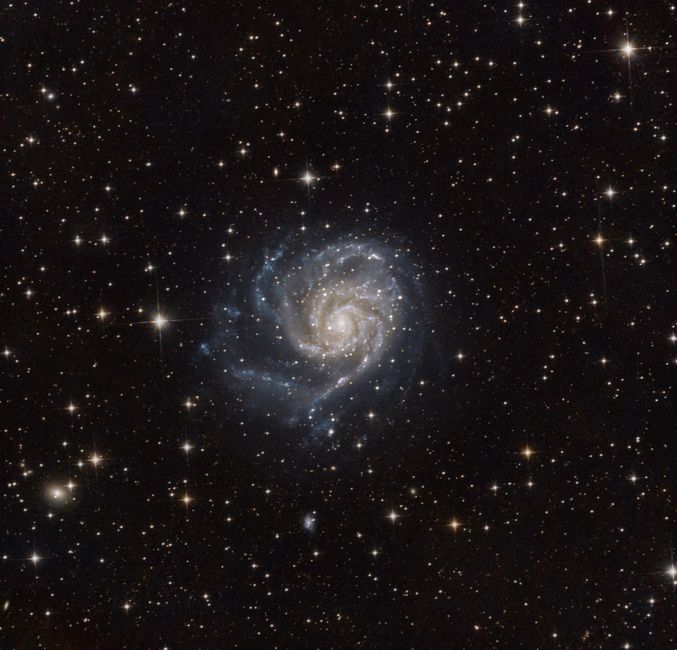
An international team using the European VLBI Network (EVN) has precisely localized a repeating Fast Radio Burst (FRB), FRB 20201124A, to the arm of an active spiral galaxy, SDSS J051029.09+332213.3. This FRB exhibited a rotation measure 10,000 times greater than typical FRBs, indicating an extremely magnetized environment. The localization was achieved by combining radio observations from multiple telescopes across the globe, providing unparalleled angular resolution. This specific environment suggests that at least some FRBs originate from young, highly magnetized neutron stars (magnetars) within dense regions, challenging the notion that all FRBs come from isolated, pristine environments. (Published in *Nature Astronomy*).
Editorial check
How this page is checked
Source trail
arxiv.org
External links are separated from Surfaced commentary.
Reader safety
Context before clicks
Product links and external services are not presented as guarantees.
Monetization
No affiliate flag
Ads and commerce links are kept distinct from editorial text.
Surfaced take
Why It’s Fascinating
Experts were intrigued because most FRBs had been localized to less active, often older, dwarf galaxies or even globular clusters, suggesting a variety of progenitor environments. This localization confirms that highly active star-forming regions with strong magnetic fields can indeed host these mysterious cosmic flashes, reinforcing the magnetar hypothesis for some FRBs. In the next 5-10 years, continued precise FRB localizations will help us map the distribution of baryons (normal matter) in the universe and potentially probe intergalactic magnetic fields. Think of it as finding a lighthouse whose beam briefly flashes from a bustling port, not just a remote island. Radio astronomers and cosmologists studying the intergalactic medium benefit most. Could studying the varying environments of FRBs help us differentiate between multiple proposed origins for these enigmatic bursts?
Related

Perspective
Perspective is a high-performance, streaming data visualization engine developed by J.P. Morgan, designed for handling massive, real-time datasets in the…

Upstream
Upstream redefines the email experience by creating an inbox designed for seamless collaboration between humans and AI agents. It's built to be a delightful…
Enjoyed this? Get five picks like this every morning.
Free daily newsletter — zero spam, unsubscribe anytime.