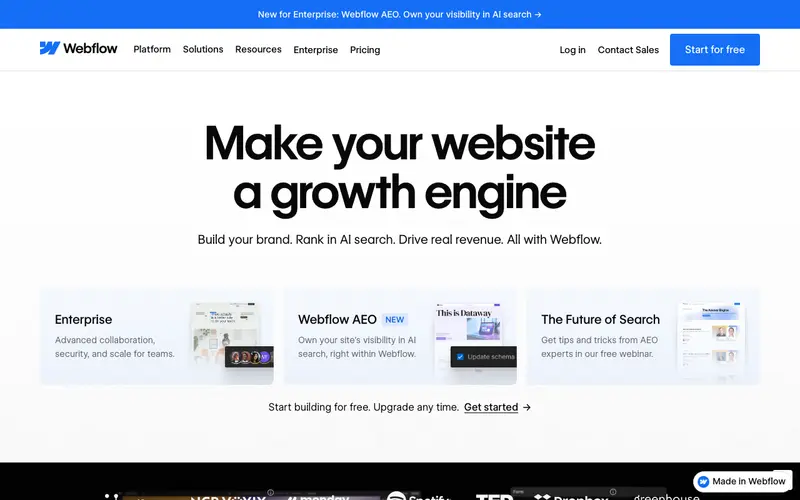
Webflow is a visual web design tool that allows users to create professional, responsive websites without writing code. It offers a robust set of design controls, similar to graphic design software, combined with powerful CMS capabilities and hosting. Webflow operates on a freemium model, offering a free tier for learning and small projects, with paid plans for custom domains, e-commerce, and increased site performance. It stands out for giving designers complete creative control over every aspect of their website's look and feel, from animations to layouts, all while generating clean, semantic code.
Editorial check
How this page is checked
Source trail
webflow.com
External links are separated from Surfaced commentary.
Reader safety
Context before clicks
Product links and external services are not presented as guarantees.
Monetization
No affiliate flag
Ads and commerce links are kept distinct from editorial text.
Surfaced take
Why It’s Useful
For designers and entrepreneurs, Webflow is a game-changer, bridging the gap between design and development. It empowers individuals to build stunning, custom websites that truly reflect their brand, without needing to hire a developer or learn complex coding languages. Its visual interface is intuitive yet powerful, offering fine-grained control over responsive design, interactions, and animations. The integrated CMS makes managing content a breeze, perfect for blogs, portfolios, and marketing sites. Many small businesses and freelancers leverage Webflow to create high-quality online presences efficiently and affordably, saving significant time and money compared to traditional web development workflows. Its exportable code also appeals to developers looking for a faster prototyping tool.
In everyday life
When you’d actually reach for this
You need to quickly build a landing page for a bake sale you're organizing. When a friend asks for a simple portfolio site to showcase their photography, you can help them get it started. You want to set up a personal blog to share those articles you've been bookmarking.






Enjoyed this? Get five picks like this every morning.
Free daily newsletter — zero spam, unsubscribe anytime.