Photo via Pexels
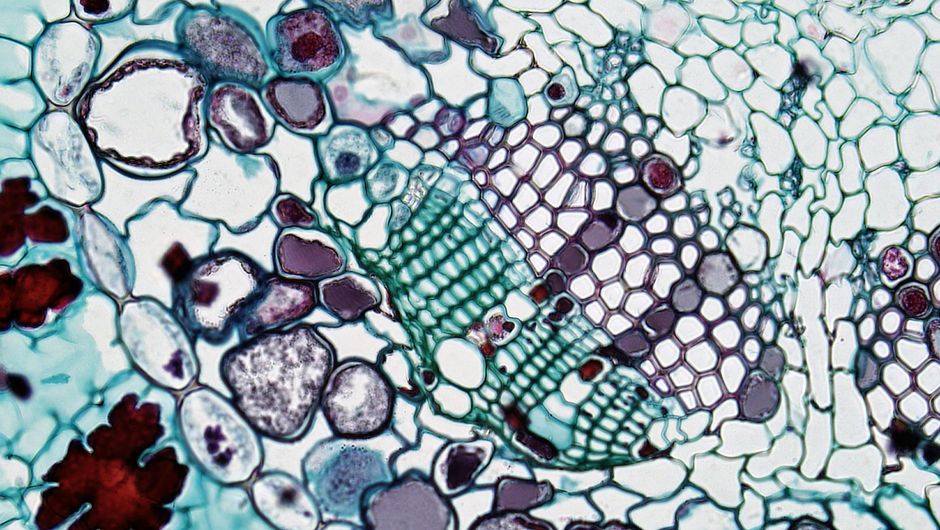
Bio-integrated electronic-cell hybrid devices merge living biological cells with synthetic electronic components to create functional systems that leverage the sensing, processing, and self-repair capabilities of biology with the computational power and control of electronics. These hybrids can range from living cell sensors integrated with microchips to bio-actuators controlled by electrical signals. Research is burgeoning at institutions like the Max Planck Institute for Medical Research, Stanford University, and companies exploring bio-computing and bio-sensing. This technology is in early research and prototype stages, primarily demonstrating proof-of-concept for specific applications. In 2023, researchers at EPFL published in Nature Communications about a bio-integrated chip incorporating human neurons that could learn and adapt, showcasing a novel approach to neuromorphic computing. This differs significantly from purely electronic devices by harnessing the inherent complexity and responsiveness of living systems.
Editorial check
How this page is checked
Source trail
cbie.northwestern.edu
External links are separated from Surfaced commentary.
Reader safety
Context before clicks
Product links and external services are not presented as guarantees.
Monetization
No affiliate flag
Ads and commerce links are kept distinct from editorial text.
Surfaced take
Why It Matters
Traditional electronics face limitations in biocompatibility, self-repair, and complex, adaptive sensing, impacting medical implants (e.g., pacemakers, prosthetics) and advanced robotics. Bio-integrated hybrids could lead to highly sophisticated, self-repairing medical devices, bio-inspired robots, and novel forms of bio-computing that interface seamlessly with biological systems. Patients requiring advanced prosthetics or implants would benefit greatly; medical device companies and advanced computing firms would see new product categories, while traditional silicon manufacturers might face new competition from bio-hybrid approaches. Major challenges include ensuring long-term biocompatibility, establishing stable and efficient interfaces between living cells and electronics, and scaling up manufacturing while maintaining cellular viability. Early niche applications could appear in 8-12 years, with broader adoption in 20-30 years. The US (DARPA, NIH) and Europe are major research hubs for this interdisciplinary field. A critical second-order consequence is the ethical debate surrounding the blurring lines between biological and artificial intelligence, and the potential for new forms of human-machine interaction.
Development Stage
Related

Snippyly
Snippyly, developed by a team focused on real-time collaboration, is a browser-based tool for capturing screenshots, recording screen videos, and sharing code…

Linearity Curve (formerly Vectornator)
Linearity Curve, developed by the German company Linearity GmbH, is a powerful vector graphic design software available on macOS and iPad, known for its…
Enjoyed this? Get five picks like this every morning.
Free daily newsletter — zero spam, unsubscribe anytime.