Photo via Pexels
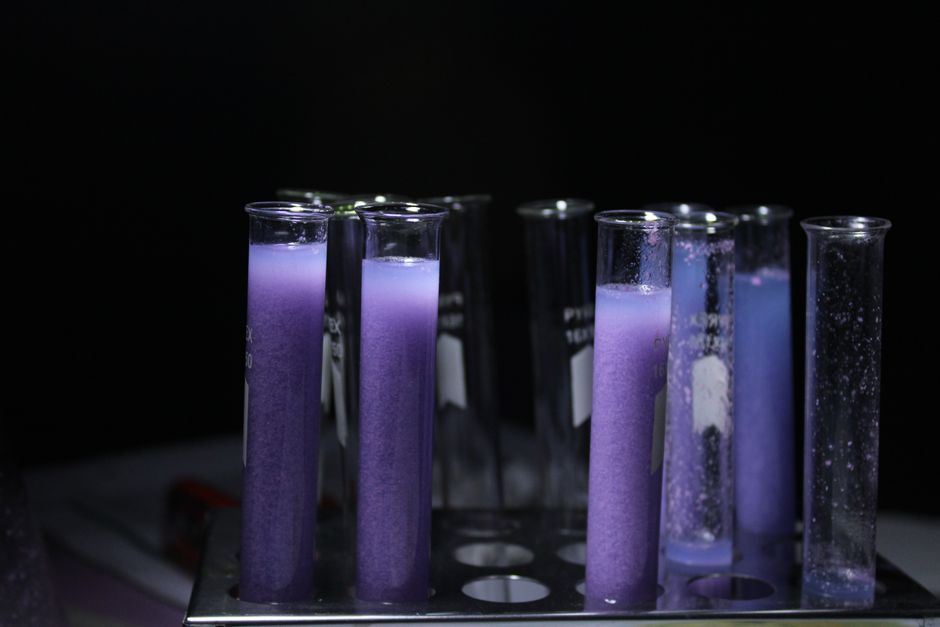
Borophene, a two-dimensional allotrope of boron, consists of single-atom-thick layers with a highly anisotropic and polymorphic structure. When confined to nanoscale dimensions, these materials form borophene quantum dots (BQDs) which exhibit unique quantum mechanical properties, including tunable electronic and optical characteristics due to quantum confinement effects. Key research is being conducted at Northwestern University (Prof. Mark C. Hersam), Rice University, and Zhejiang University. This technology is firmly in the early research phase, with laboratory demonstrations focused on fundamental properties. In April 2023, a team from Zhejiang University published in *Advanced Materials* on synthesizing stable, highly fluorescent borophene quantum dots with tunable emission from blue to green, a capability difficult to achieve with traditional carbon quantum dots. This advances beyond other 2D materials like graphene quantum dots by offering superior electron mobility and structural diversity.
Editorial check
How this page is checked
Source trail
arxiv.org
External links are separated from Surfaced commentary.
Reader safety
Context before clicks
Product links and external services are not presented as guarantees.
Monetization
No affiliate flag
Ads and commerce links are kept distinct from editorial text.
Surfaced take
Why It Matters
The global quantum computing and advanced display markets are projected to reach hundreds of billions, demanding novel materials for high-performance components. BQDs could enable more efficient quantum computers, brighter and more energy-efficient displays, or highly sensitive biosensors for medical diagnostics, impacting billions of lives. Companies specializing in semiconductor fabrication and display technology would benefit, while existing quantum dot manufacturers might need to innovate. The primary technical challenge is the stable, scalable synthesis of high-quality borophene and its quantum dots, along with precise control over their size and morphology. A realistic timeline for practical applications is 15-25 years, with academic institutions in the US, China, and Europe driving the foundational research. A surprising long-term consequence could be the development of 'quantum material-based' biological interfaces, allowing for unprecedented resolution in neural sensing or drug targeting.
Development Stage
Related

TRUST
TRUST is an experimental project that aims to make coding Rust feel like programming in the late 1980s, reminiscent of languages like C. It achieves this by…

wloc
wloc is a sophisticated tool designed to modify your Apple device's network-based location (gs-loc). It seamlessly integrates with popular proxy tools like…
Enjoyed this? Get five picks like this every morning.
Free daily newsletter — zero spam, unsubscribe anytime.