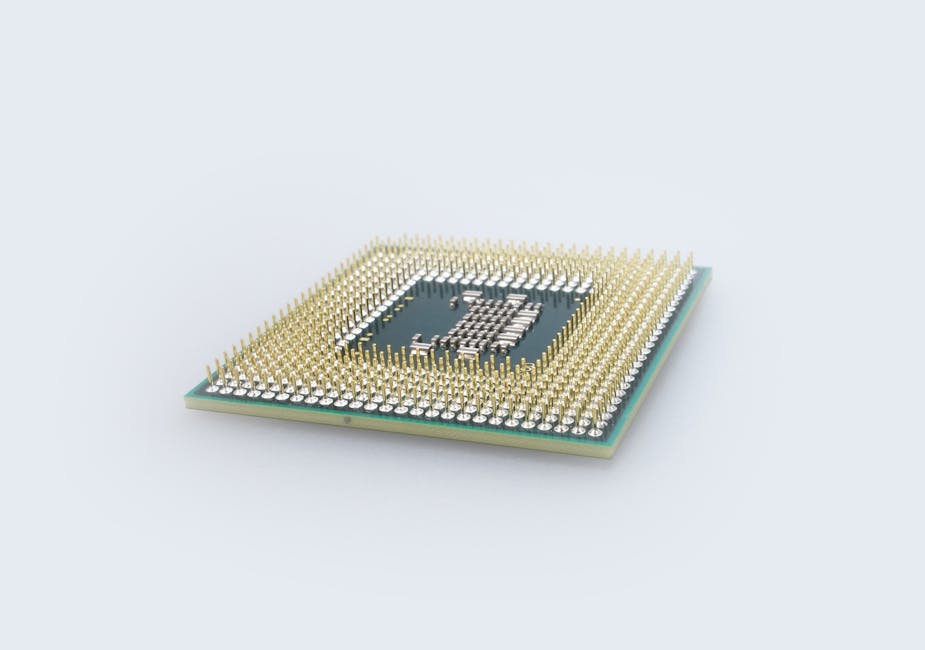
Photo via Pexels
Cryogenic superconducting transmon qubit processors utilize superconducting circuits cooled to millikelvin temperatures to create and manipulate qubits, leveraging the quantum properties of Cooper pairs. The 'transmon' design specifically reduces sensitivity to charge noise, improving coherence times. IBM Quantum, Google Quantum AI, and Rigetti Computing are leading developers, pushing the boundaries of qubit count and performance in these systems. These processors are currently in the early commercialization and growth phase, with systems accessible via cloud platforms for researchers and enterprises. In December 2023, IBM unveiled the 'Condor' processor, boasting 1,121 superconducting qubits, marking the largest quantum chip to date. This technology offers high connectivity and fast gate operations compared to other qubit modalities like trapped ions, though it requires extremely complex and expensive cryogenic infrastructure.
Editorial check
How this page is checked
Source trail
ibm.com
External links are separated from Surfaced commentary.
Reader safety
Context before clicks
Product links and external services are not presented as guarantees.
Monetization
No affiliate flag
Ads and commerce links are kept distinct from editorial text.
Surfaced take
Why It Matters
Current classical supercomputers struggle with certain optimization and simulation problems, leading to billions in lost efficiency across industries like logistics and drug discovery. When mainstream, cryogenic superconducting quantum computers will revolutionize these fields, allowing for rapid development of new materials and highly optimized supply chains, impacting potentially trillions in global GDP. IBM and Google are clear frontrunners, leveraging their extensive R&D and cloud infrastructure, while traditional high-performance computing companies may need to adapt. Significant technical barriers include scaling qubit count while maintaining high fidelity, managing heat dissipation at extreme cold, and developing robust error correction. A realistic timeline for achieving practical quantum advantage with these processors is 5-15 years, with widespread commercial use by 2040. The US, China, and EU are heavily investing in this specific hardware platform. A second-order consequence is the development of next-generation cryogenic technologies, finding applications far beyond quantum computing, such as in ultra-low noise sensors.
Development Stage
Related

TRUST
TRUST is an experimental project that aims to make coding Rust feel like programming in the late 1980s, reminiscent of languages like C. It achieves this by…

Snappify
Snappify, created by a team focused on developer tools, is a web-based application designed to transform code snippets into visually appealing images for…
Enjoyed this? Get five picks like this every morning.
Free daily newsletter — zero spam, unsubscribe anytime.