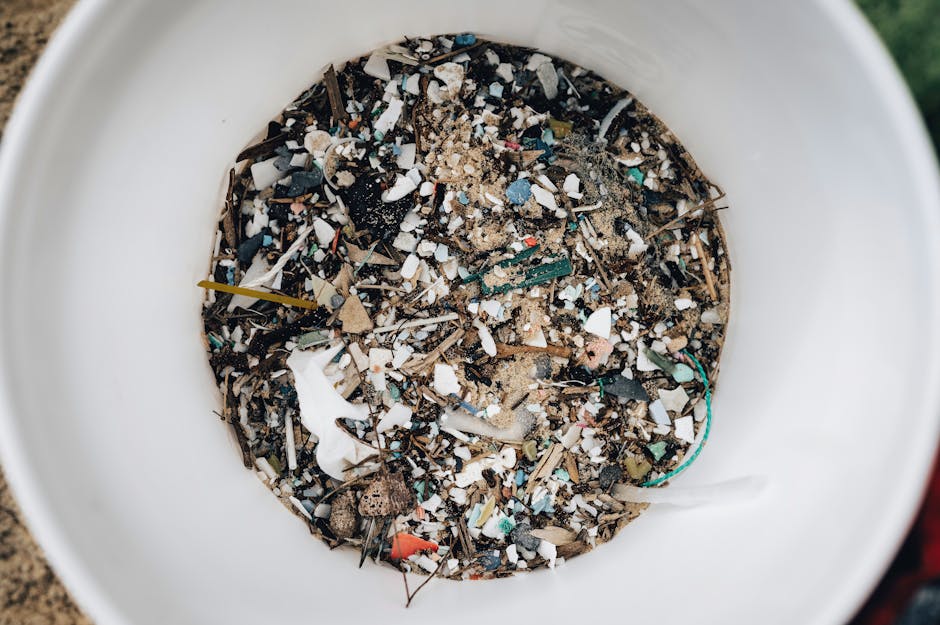
Photo via Pexels
Researchers led by Dr. Xiaotong Peng from the Institute of Deep-sea Science and Engineering, Chinese Academy of Sciences, have uncovered alarming concentrations of microplastics in the deepest parts of the ocean. Their study revealed microplastic concentrations up to 2,000 pieces per liter of sediment in the Challenger Deep, located in the Mariana Trench, the deepest point on Earth. The team collected sediment and water samples using remotely operated vehicles and submersibles, then meticulously analyzed them for plastic fragments. This discovery suggests that deep-ocean trenches, once thought to be pristine, are acting as significant, unexpected sinks for plastic pollution. The findings, published in Environmental Science & Technology in 2018, challenge previous assumptions about plastic distribution.
Editorial check
How this page is checked
Source trail
pubs.acs.org
External links are separated from Surfaced commentary.
Reader safety
Context before clicks
Product links and external services are not presented as guarantees.
Monetization
No affiliate flag
Ads and commerce links are kept distinct from editorial text.
Surfaced take
Why It’s Fascinating
This discovery is deeply troubling for marine scientists and environmental advocates, revealing that plastic pollution has permeated even the most remote and extreme environments on our planet. It overturns the prior understanding that microplastics primarily accumulated in surface gyres or coastal areas, confirming that deep-ocean currents and topography can funnel plastic into abyssal trenches. Within 5-10 years, continued accumulation could severely impact deep-sea biodiversity and potentially introduce plastics into the deep-sea food web, with unknown long-term consequences. Imagine a majestic, untouched mountain valley suddenly becoming the world's deepest landfill; that's the unsettling reality facing our ocean trenches. Policymakers, waste management industries, and conservationists are the most critical beneficiaries of this stark information. Can we ever truly 'clean up' the ocean's deepest reaches, or is prevention the only viable strategy?
Related

The bottleneck might be the air in the room
This article delves into the often-overlooked impact of indoor air quality, specifically carbon dioxide (CO2) levels, on human cognitive function and…

Deepseek Harness
DeepSeek Harness is an open-source framework designed for developing and integrating AI models, particularly focusing on a plugin architecture where…
Enjoyed this? Get five picks like this every morning.
Free daily newsletter — zero spam, unsubscribe anytime.