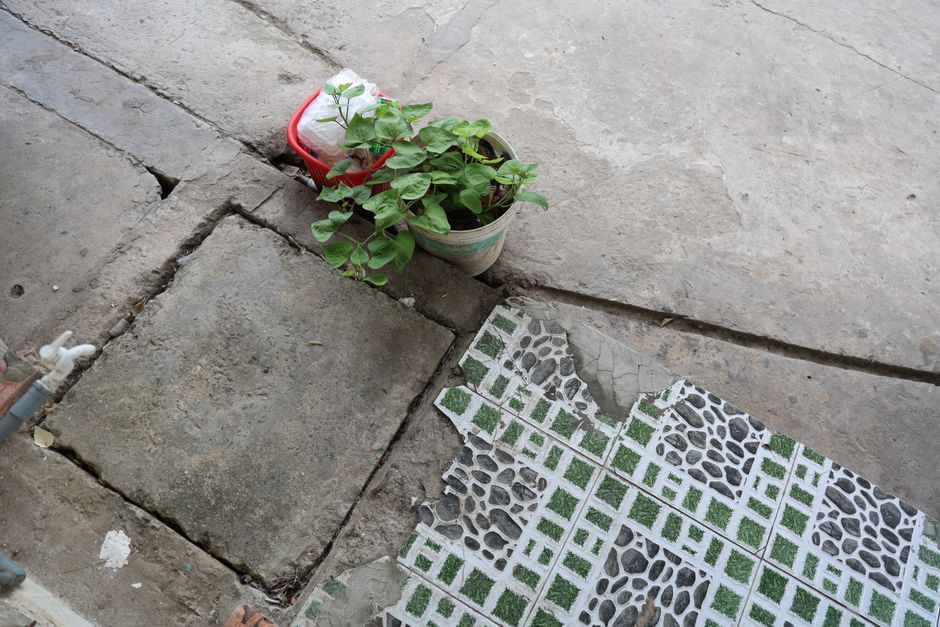
Photo via Pexels
An international research team led by the University of Toronto Mississauga discovered that white clover (*Trifolium repens*) has independently evolved a common defense mechanism, cyanide production, in response to urban environments worldwide. Analyzing over 110,000 samples from 160 cities across 25 countries, they found that urban populations consistently produce less cyanide than rural counterparts due to reduced herbivory and warmer temperatures, a clear signal of local adaptation. This massive "Global Urban Evolution Project" (GLUE) demonstrates rapid, parallel evolution on a global scale, occurring within just decades. This points to cities as hotspots for evolutionary change, offering living laboratories for observing adaptation in real-time. The findings were published in *Science* in 2021.
Editorial check
How this page is checked
Source trail
science.sciencemag.org
External links are separated from Surfaced commentary.
Reader safety
Context before clicks
Product links and external services are not presented as guarantees.
Monetization
No affiliate flag
Ads and commerce links are kept distinct from editorial text.
Surfaced take
Why It’s Fascinating
This discovery is remarkable because it shows parallel evolution occurring at an unprecedented speed and scale, challenging the notion that evolution is always a slow process. It confirms that human-modified environments are powerful selective forces, driving rapid, observable changes in species, overturning older views of cities as evolutionary "dead ends." Within the next 5-10 years, understanding these urban adaptation mechanisms could inform conservation strategies for urban biodiversity or even guide the development of more resilient crops adapted to changing climates. It's like finding that different groups of people, without communicating, all started wearing lighter clothes when moving to warmer cities. Ecologists, urban planners, and agricultural scientists benefit greatly from these insights. What other species are undergoing similar, unseen evolutionary shifts right under our noses in our cities?
Related
The hardest working font in Manhattan (2025)
This project showcases 'The hardest working font in Manhattan (2025)', a conceptual typographic design exploring the visual resilience and adaptability of…

arXiv
arXiv is a free, open-access repository of preprints for scientific research papers, primarily in physics, mathematics, computer science, quantitative biology…
Enjoyed this? Get five picks like this every morning.
Free daily newsletter — zero spam, unsubscribe anytime.