Photo via Pexels
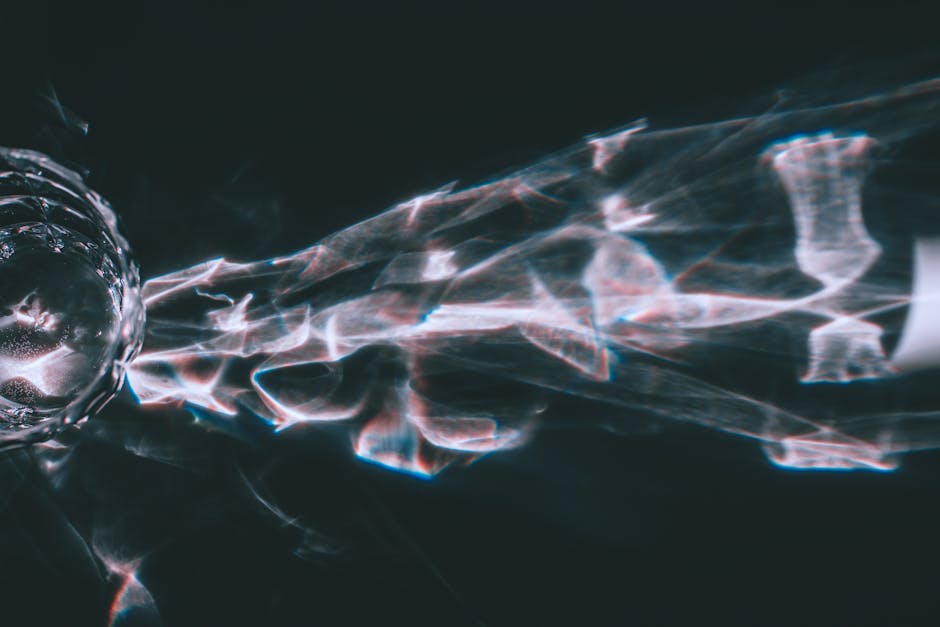
Researchers at Purdue University have successfully created a metamaterial with a near-zero refractive index for visible light, a property previously thought impossible. This groundbreaking material allows light waves to propagate as if they were moving through a vacuum, but within a solid medium, effectively removing diffraction limits. The team demonstrated that light's phase velocity could be made 10 times faster than its speed in air, allowing for unprecedented control over light. This was achieved by precisely structuring a composite material at the nanoscale, forcing light to behave in extraordinary ways. This discovery holds profound implications for optics and photonics.
Editorial check
How this page is checked
Source trail
purdue.edu
External links are separated from Surfaced commentary.
Reader safety
Context before clicks
Product links and external services are not presented as guarantees.
Monetization
No affiliate flag
Ads and commerce links are kept distinct from editorial text.
Surfaced take
Why It’s Fascinating
This discovery is revolutionary because it fundamentally alters how light interacts with matter, challenging classical optics that govern how lenses and mirrors typically work. A near-zero refractive index means light effectively loses its "sense of direction" within the material, offering unprecedented control. Within 5-10 years, this metamaterial could enable "perfect lenses" that resolve details far smaller than the wavelength of light, ultra-compact optical circuits, or even components for invisibility cloaks. It's like having a special hallway where you can make light go straight through walls or bend around corners as if they weren't there, without slowing down. Scientists, engineers, and industries relying on advanced optics will find this transformative. What are the ultimate limits of light manipulation if we can engineer materials to have any desired refractive index?
Related

Lumara Space Dashboard
Lumara is an exquisitely designed, real-time interactive web dashboard developed by a passionate team focused on space visualization, bringing celestial…

Clipdrop
Clipdrop is a suite of AI-powered tools designed to enhance and manipulate images with remarkable ease. It offers features like background removal, object…
Enjoyed this? Get five picks like this every morning.
Free daily newsletter — zero spam, unsubscribe anytime.