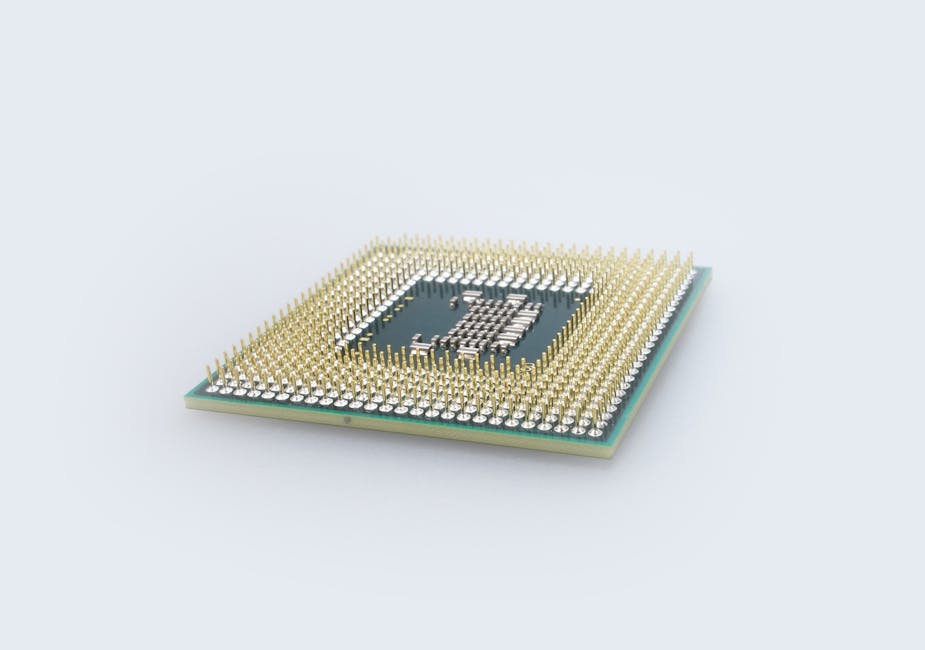
Photo via Pexels
Reservoir Computing (RC) is a simplified approach to recurrent neural networks where the complex, non-linear dynamics of a fixed 'reservoir' of interconnected nodes process input, and only a simple linear readout layer needs to be trained. This makes RC particularly well-suited for physical implementations, including neuromorphic hardware, due to its computational efficiency and ease of training. Researchers at EPFL, TU Dresden, and companies like IBM are exploring RC on various substrates, from memristors to optical systems. This technology is in advanced research, showing promise for time-series prediction and complex pattern recognition. In January 2024, researchers at TU Dresden demonstrated a memristor-based reservoir computer efficiently learning and predicting chaotic time series with high accuracy, requiring minimal training, unlike traditional recurrent neural networks that use computationally intensive backpropagation.
Editorial check
How this page is checked
Source trail
intel.com
External links are separated from Surfaced commentary.
Reader safety
Context before clicks
Product links and external services are not presented as guarantees.
Monetization
No affiliate flag
Ads and commerce links are kept distinct from editorial text.
Surfaced take
Why It Matters
Processing sequential data (speech, video, sensor streams) efficiently is a major challenge for traditional neural networks due to their high computational cost for training recurrent connections, impacting industries like autonomous vehicles ($60 billion market) and IoT. RC on neuromorphic hardware could enable extremely low-power, real-time processing of temporal data directly on edge devices, unlocking new capabilities for predictive maintenance, intelligent voice assistants, and context-aware robotics. Software companies developing time-series analysis tools and hardware manufacturers specializing in neuromorphic chips would gain significant market share. The main barriers include designing and fabricating stable, high-performance physical reservoirs and developing robust methods for task-specific readout layer training. Commercial applications in specialized areas could emerge within 7-12 years, with Europe, particularly Germany and Switzerland, having a strong research presence. A second-order effect could be the widespread deployment of highly localized, personalized predictive AI that operates entirely offline, enhancing privacy and robustness.
Development Stage
Related

TRUST
TRUST is an experimental project that aims to make coding Rust feel like programming in the late 1980s, reminiscent of languages like C. It achieves this by…

ds4
ds4 (DeepSeek 4 Flash) is a highly optimized local inference engine designed specifically for Apple Silicon Macs with Metal GPU support. It allows users to run…
Enjoyed this? Get five picks like this every morning.
Free daily newsletter — zero spam, unsubscribe anytime.