Photo via Pexels
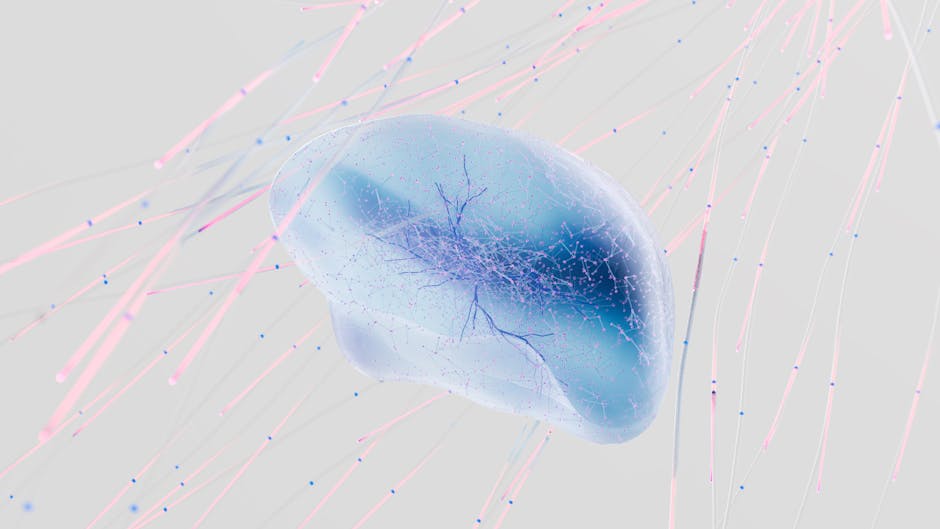
Bio-hybrid neuromorphic systems integrate living biological neurons or neural tissue with artificial electronic circuits to create computing platforms that harness the unique processing capabilities of biological matter. These systems aim to leverage the inherent parallelism, adaptability, and energy efficiency of biological neurons, often cultured on multi-electrode arrays (MEAs), while using electronics for control and interface. Research groups at Max Planck Institute, Johns Hopkins University, and startups like Cortical Labs are actively exploring this frontier. This technology is in the early research phase, primarily demonstrating proof-of-concept for basic learning and pattern recognition tasks. In October 2022, Cortical Labs published a study in Neuron where a dish of human brain cells (mini-brains) learned to play a simple Pong-like video game, demonstrating goal-directed behavior, a stark departure from purely silicon-based computing.
Editorial check
How this page is checked
Source trail
Editorial source pending
External links are separated from Surfaced commentary.
Reader safety
Context before clicks
Product links and external services are not presented as guarantees.
Monetization
No affiliate flag
Ads and commerce links are kept distinct from editorial text.
Surfaced take
Why It Matters
Conventional AI struggles with true general intelligence, continuous learning, and extreme energy efficiency, limitations that biological brains naturally overcome, despite a global AI market projected to exceed $1.8 trillion by 2030. Bio-hybrid systems offer a radical new paradigm for computing, potentially leading to breakthroughs in understanding brain function, developing ultra-low-power adaptive AI, and creating novel interfaces for neuroprosthetics. Biotechnology companies and advanced computing research institutes would be prime beneficiaries, while traditional semiconductor firms might find it difficult to pivot. Significant ethical concerns surrounding sentient AI, biocompatibility of interfaces, and the stability of living components are major barriers. A timeline for practical applications is highly speculative, likely 15-30+ years for complex tasks, with the US, EU, and Australia prominent in this niche research area. A profound second-order consequence could be a redefinition of 'intelligence' and 'consciousness' as we begin to engineer systems that blend biological and artificial cognition.
Development Stage
Related

OpenShot 4.0 – Open-source video editor
OpenShot 4.0 is a significant update to the popular open-source video editing software. This version introduces advanced features for recording screen content…

Warp
Warp is a modern, AI-powered terminal emulator designed to make command-line work more efficient and enjoyable. It integrates AI features directly into the…
Enjoyed this? Get five picks like this every morning.
Free daily newsletter — zero spam, unsubscribe anytime.