Photo via Pexels
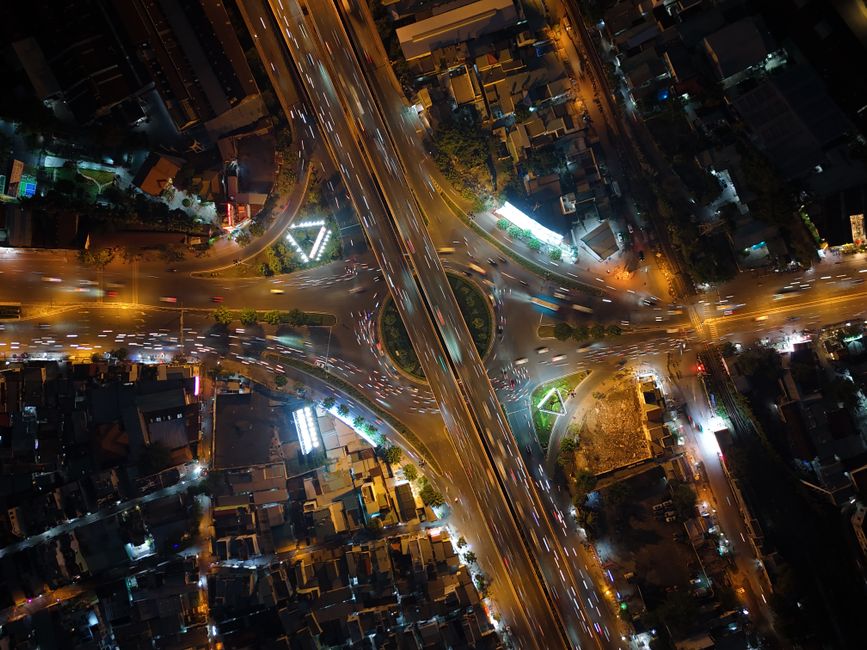
Researchers at the University College London (UCL), led by Professor Michael Batty, are applying fractal geometry to analyze and optimize urban growth patterns and infrastructure. They discovered that cities exhibiting higher fractal dimensions, particularly in their street networks and building distributions, tend to have more efficient resource allocation and better accessibility. This was achieved by analyzing satellite imagery and geographical data using fractal dimension calculations, revealing how complex, self-similar patterns emerge in well-functioning cities. This suggests that designing cities with natural fractal properties can lead to more resilient and sustainable urban environments.
Editorial check
How this page is checked
Source trail
Editorial source pending
External links are separated from Surfaced commentary.
Reader safety
Context before clicks
Product links and external services are not presented as guarantees.
Monetization
No affiliate flag
Ads and commerce links are kept distinct from editorial text.
Surfaced take
Why It’s Fascinating
Urban planners are often surprised by the hidden mathematical order within seemingly chaotic cityscapes, showing that natural growth leads to fractal patterns. This challenges traditional linear planning models, confirming that emergent, self-similar structures offer inherent efficiencies that top-down designs often miss. In the next 5-10 years, this could inform new urban development strategies, leading to city designs with optimized traffic flow, reduced energy consumption, and improved public space utilization, benefiting billions of city dwellers. It's like realizing a tree's branching pattern isn't just beautiful, but perfectly optimized for nutrient distribution and sunlight capture. Architects, urban planners, and environmental policymakers will benefit most. Can we intentionally design fractal cities from scratch, or must they evolve organically?
Related

Isopolis – Isometric pixel map of SF
Isopolis is a charmingly detailed isometric pixel art map of San Francisco. It meticulously recreates the city's iconic landmarks, neighborhoods, and even…

Carbon
Carbon, an open-source project developed by Dawn Labs, is a web-based tool designed to create and share beautiful images of your source code. It allows users…
Enjoyed this? Get five picks like this every morning.
Free daily newsletter — zero spam, unsubscribe anytime.