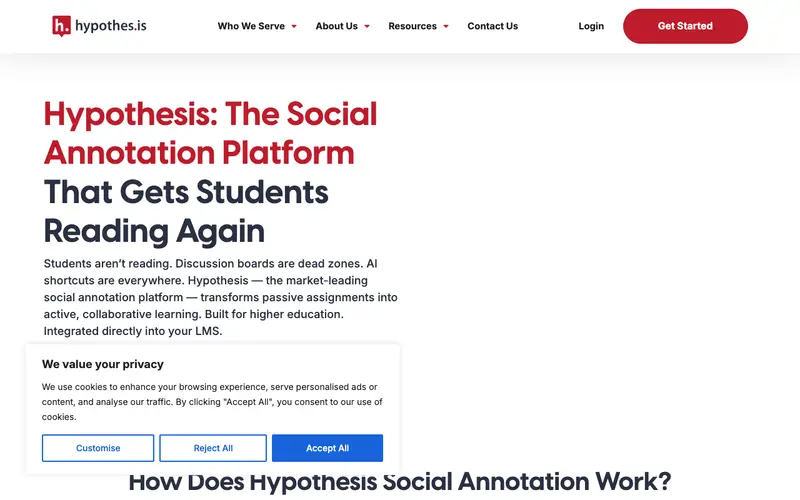
Hypothes.is is an open-source project that allows users to annotate web pages and PDFs collaboratively or privately, acting as a universal annotation layer for the web. It was created by a non-profit organization dedicated to fostering open, standards-based annotation, promoting critical engagement with online content. The core feature is a browser extension and web service that enables highlighting and adding notes to almost any digital document, which can then be shared with groups or kept personal. It's built for students, educators, researchers, and anyone who reads online and wants to engage deeply with content or collaborate on documents. Users open Hypothes.is when they encounter an article, paper, or website they need to analyze, discuss, or remember specific points from. It integrates directly into web browsers as an extension and offers PDF annotation functionality when viewing PDFs online, making it versatile.
Editorial check
How this page is checked
Source trail
web.hypothes.is
External links are separated from Surfaced commentary.
Reader safety
Context before clicks
Product links and external services are not presented as guarantees.
Monetization
No affiliate flag
Ads and commerce links are kept distinct from editorial text.
Surfaced take
Why It’s Useful
While many tools offer private note-taking, Hypothes.is excels at collaborative, public, or private group annotation, offering a social layer that complements static document tools like Google Docs by adding dynamic discussion. For the university course instructor, it transforms readings into interactive discussions, allowing students to highlight and comment directly on primary sources, fostering deeper engagement. For the research team reviewing a grant proposal, it provides a centralized platform for shared feedback and questions on a live document, streamlining the review process. It is completely free and open-source, supported by grants and donations, ensuring its long-term availability and neutrality. A neat feature often overlooked is its ability to create 'groups' for specific projects or classes, allowing controlled sharing of annotations only with relevant members. Its relative obscurity stems from the fact that many users are simply unaware that such a powerful, open annotation layer exists for the entire web, relying instead on platform-specific, siloed tools. It boasts a vibrant community, extensive documentation, and regular updates, ensuring it remains robust and relevant.






Enjoyed this? Get five picks like this every morning.
Free daily newsletter — zero spam, unsubscribe anytime.