Photo via Pexels
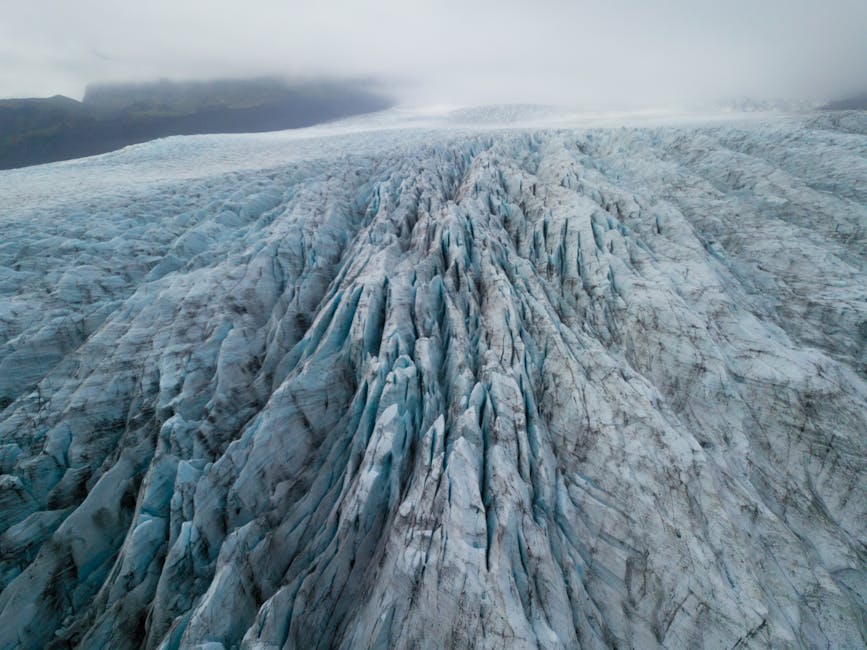
A collaborative effort between the University of Oxford and the Alfred Wegener Institute has utilized infrasound arrays to detect and quantify previously unobserved melting processes beneath the Greenland ice sheet. Researchers identified distinct infrasonic signals, consistent with the turbulent flow of meltwater within subglacial channels, indicating significant basal melting contributing to ice loss. They recorded an average of 150 unique meltwater-related infrasound events per day in certain regions, directly correlating with periods of increased surface melt. This novel methodology, employing ground-based infrasound sensors, offers a real-time, non-invasive way to monitor subglacial hydrology, circumventing the limitations of satellite imagery for subsurface activity. The findings suggest that basal melting is a more dynamic and pervasive contributor to ice sheet instability than previously modeled.
Editorial check
How this page is checked
Source trail
ox.ac.uk
External links are separated from Surfaced commentary.
Reader safety
Context before clicks
Product links and external services are not presented as guarantees.
Monetization
No affiliate flag
Ads and commerce links are kept distinct from editorial text.
Surfaced take
Why It’s Fascinating
Experts were surprised by the clarity and frequency of the infrasonic signals, revealing a 'hidden' driver of ice sheet dynamics that traditional methods struggled to observe directly. This discovery overturns prior models that often underestimated the contribution of basal melting to overall ice loss, confirming a more complex and rapid interaction between ice and water. Within 5-10 years, this infrasound monitoring could provide crucial data for more accurate climate predictions and sea-level rise projections, informing global climate policy. It's like listening to the gurgling of a giant, melting ice cube from miles away, hearing its internal breakdown. Climate scientists, glaciologists, and policymakers focused on climate change and coastal protection benefit most. What other hidden geological or glaciological processes could be revealed by persistent infrasound listening?
Related

Graphistry
Graphistry is a GPU-accelerated visual graph analytics platform that allows users to interactively visualize and explore massive networks and relationships in…

Tiller Money
Tiller Money automates the process of pulling your financial data from various accounts (banks, credit cards, investments) directly into Google Sheets or…
Enjoyed this? Get five picks like this every morning.
Free daily newsletter — zero spam, unsubscribe anytime.