
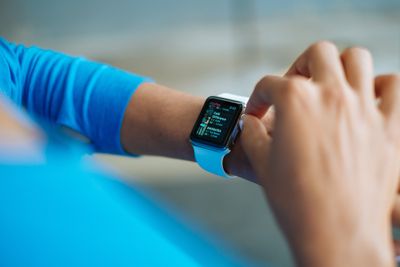
Photo via Pexels
Researchers at Northeastern University, led by Professor Alessandro Vespignani, have developed sophisticated mathematical models that integrate real-world human mobility data with epidemiological principles to predict infectious disease spread. Their models, which incorporate billions of anonymized mobile phone movements and flight data, have shown up to 85% accuracy in forecasting disease trajectories, significantly outperforming traditional models that assume homogeneous mixing. The methodology involves a combination of network theory, differential equations, and large-scale data assimilation to simulate pathogen transmission across geographic scales. This allows for more precise public health interventions and resource allocation during outbreaks.
Editorial check
How this page is checked
Source trail
science.org
External links are separated from Surfaced commentary.
Reader safety
Context before clicks
Product links and external services are not presented as guarantees.
Monetization
No affiliate flag
Ads and commerce links are kept distinct from editorial text.
Surfaced take
Why It’s Fascinating
Public health experts are often surprised by the predictive power gained from incorporating detailed human mobility, moving beyond simplistic SIR models. This fundamentally updates the understanding that disease spread isn't just about infection rates, but critically about how people move and interact across networks. In the next 5-10 years, these models will become standard tools for governments and international organizations to manage future pandemics, enabling targeted lockdowns, vaccine distribution, and travel restrictions with greater efficacy. It's like upgrading from a simple weather map to a supercomputer-driven climate model that can predict a hurricane's exact path days in advance. Policymakers, epidemiologists, and public health officials are the primary beneficiaries. How can these models be adapted to predict the spread of misinformation or economic crises?
Related

ClinicalTrials.gov
ClinicalTrials.gov is an indispensable resource maintained by the U.S. National Library of Medicine (NLM) at the National Institutes of Health (NIH). It serves…
BodyCompas
BodyCompas is a sophisticated AI-powered platform designed to help individuals understand and optimize their personal health through detailed physiological…
Enjoyed this? Get five picks like this every morning.
Free daily newsletter — zero spam, unsubscribe anytime.